Living off the gas grid means keeping a closer eye on your fuel than most people ever have to. As the nights get colder, LPG homes use more gas, deliveries get busier and any small fault in the boiler shows up fast. The short answer: check your tank level and delivery arrangements now, keep the tank and its fittings clear, and get the boiler serviced before the cold sets in. Our LPG boiler installation page covers the systems we fit across Oxfordshire.
Check the tank level and your delivery plan
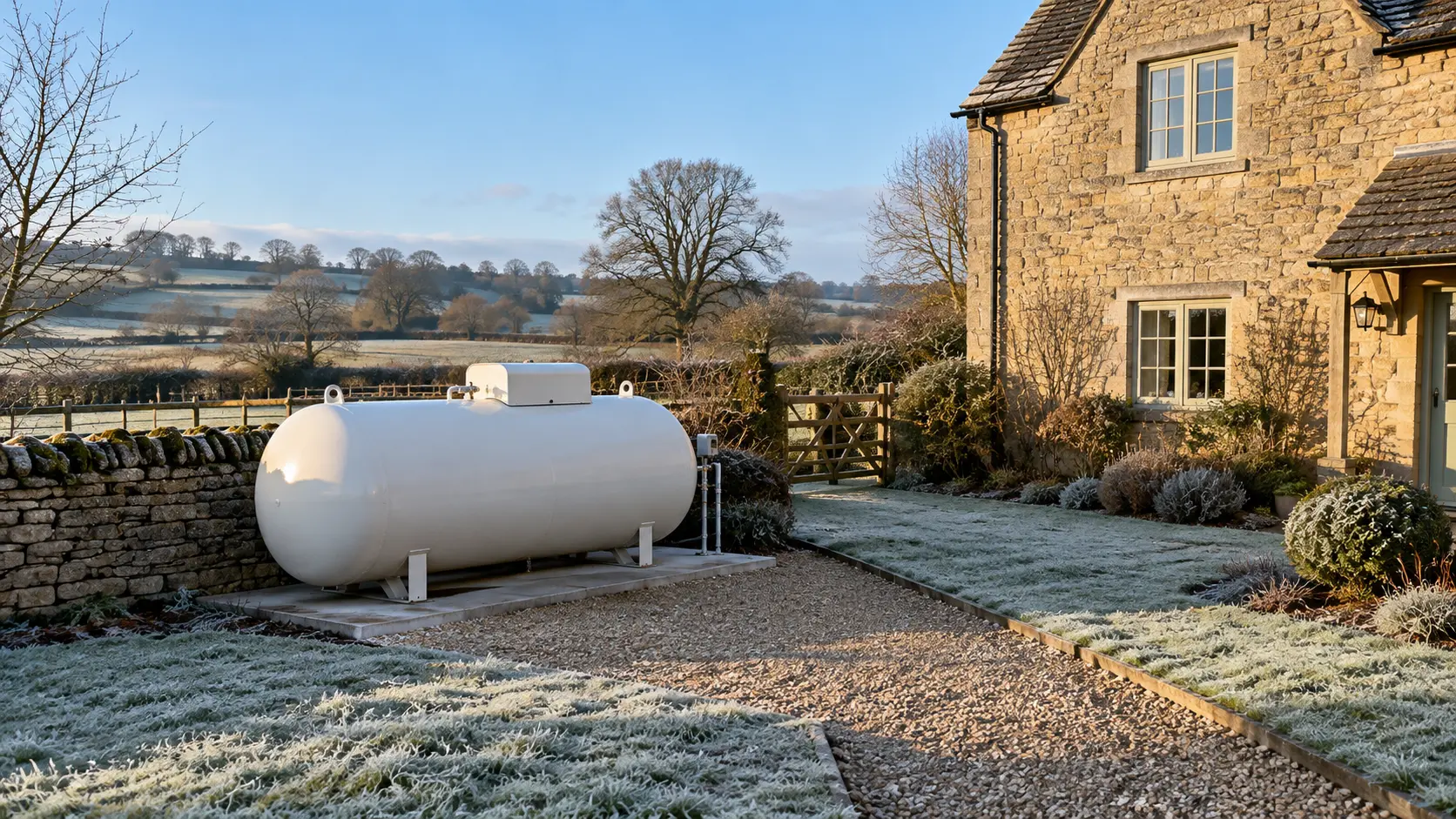
Most bulk LPG tanks have a gauge showing the percentage full. Some suppliers monitor levels remotely and deliver automatically, while others rely on you to order.
- Know which arrangement you have. If you’re on automatic top-up, check your contact details are up to date with the supplier.
- Order in good time if you top up manually, rather than waiting until the gauge is low.
- Keep the delivery route clear. The tanker needs access to the tank and its fill point, so think about parked cars, gates and overgrown hedges.
If you use cylinders rather than a bulk tank, keep a spare full one so you can swap over without a gap.
Keep the tank and fittings clear
LPG tanks have safety separation distances from buildings, boundaries and ignition sources. Around the tank:
- Keep plants, leaves and garden waste trimmed back
- Don’t store bins, logs or anything flammable nearby
- Keep the tank lid closed, so the valves and regulator stay protected
- Clear snow carefully from the top and around the fill point after heavy falls
Don’t try to adjust or repair the regulator, valves or pipework yourself. Ownership and maintenance of the tank are often the supplier’s responsibility, so contact them about any problem with it.
Get the boiler serviced
An LPG boiler should be serviced every year by a Gas Safe registered engineer qualified to work on LPG. The service checks combustion, the flue, seals and safety devices, and it’s usually a condition of the manufacturer’s warranty.
Autumn is the best time to book, before engineers get busy and before you’re relying on the heating every day.
Know the signs of a problem
- The boiler locks out or won’t fire
- Yellow or lazy flames on any LPG appliance (most should burn blue)
- Soot or staining around the boiler or flue
- The gas use seems much higher than usual
- Pilot lights going out on other appliances
If you smell gas
LPG is heavier than air, so it can collect at low levels, in cellars and drains. If you smell gas:
- Don’t use switches, flames or anything that could cause a spark
- Open doors and windows
- Turn off the supply at the tank or the emergency control valve if it’s safe to do so
- Leave the building
- Call your LPG supplier’s emergency number, usually shown on the tank or your bill. If you can’t find it, call the National Gas Emergency Service on 0800 111 999.
Fit a carbon monoxide alarm in rooms with fuel-burning appliances, and test it regularly.
LPG homes in rural Oxfordshire
Many villages around Thame, Witney and Princes Risborough are off the mains gas network, and LPG is a common choice alongside oil. Long, narrow lanes can make winter deliveries slower, so planning ahead matters. If you’re weighing up LPG against oil, our oil boiler installation page is worth a look too.
Frequently asked questions
Can LPG freeze in cold weather?
LPG itself doesn’t freeze in UK winters, but in very cold weather the gas may vaporise more slowly in the tank, especially when it’s low. Regulators can also be affected by ice. Keeping the tank fuller in winter helps. If supply seems weak or appliances struggle, contact your supplier rather than touching the regulator.
How often should an LPG boiler be serviced?
Once a year, by a Gas Safe registered engineer with the right LPG qualifications. Annual servicing keeps the boiler burning safely and efficiently and is usually required for the manufacturer’s warranty. Booking in early autumn means any faults are found before you rely on the heating every day.
Who maintains my LPG tank?
It depends on your contract. Many bulk tanks are owned and maintained by the supplier, while some homeowners own their tank outright. Check your agreement. Either way, problems with the tank, valves or regulator should be reported to the supplier or a qualified engineer, not tackled yourself.
Book your LPG boiler check
If your LPG boiler is due a service or isn’t running as it should, give us a call on 01865 602 994 or drop us a message and we’ll get it checked before winter.