If your boiler keeps losing pressure, water is escaping from the sealed heating system or a component isn’t holding pressure properly. The most common causes are a leak in pipework, a radiator or valve, air released by bleeding radiators, a pressure relief valve letting water past, or an expansion vessel that needs recharging.
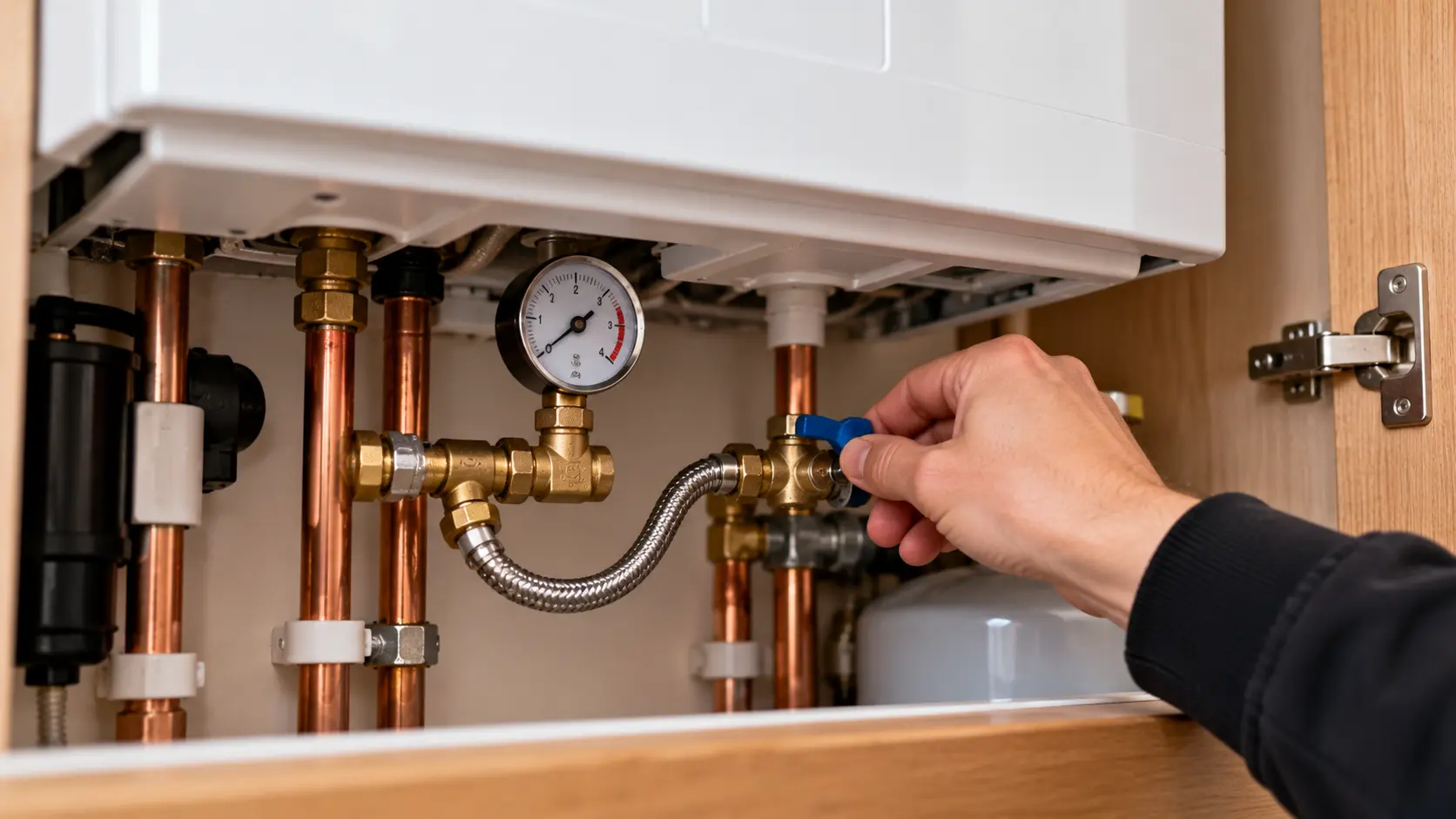
On most combi and system boilers, the gauge should sit around 1 to 1.5 bar when the heating is cold. Topping it up occasionally is fine. If you’re doing it every few weeks, book an engineer through our services page.
First, check what’s normal for your boiler
- Cold heating: usually around 1 to 1.5 bar
- Heating running: rises slightly as water expands, often towards 2 bar
- Near 3 bar: too high; the relief valve may open
- Below about 0.5 to 1 bar: the boiler may lock out
Check your boiler manual for the exact figures.
The usual suspects
Recently bled radiators
Letting air out lowers the pressure. Top it up afterwards and it should stay put.
Leaks
Check:
- Radiator valves and joints
- Pipework under sinks and in airing cupboards
- Ceilings below upstairs radiators for stains
- Under the boiler for drips
Hidden leaks under floors are harder to find and may need an engineer.
The pressure relief valve
This safety valve releases water if pressure gets too high. It usually discharges through a copper pipe outside. If that pipe drips or there are water marks below it, the valve may be faulty or opening because pressure is rising too high.
The expansion vessel
This absorbs the extra volume as water heats. If it loses its air charge, pressure rises sharply when the heating is on and drops when it cools, sometimes pushing water out through the relief valve.
Internal boiler faults
Leaks from seals, the heat exchanger or valves inside the boiler need a Gas Safe engineer.
How to top up the pressure
Most boilers have a filling loop or built-in filling key. Follow the manual:
- Turn the heating off and let it cool
- Open the filling valves slowly
- Watch the gauge and close the valves at the recommended pressure
- Reset the boiler if needed
Don’t remove the boiler casing. If you’re unsure where the filling loop is, ask an engineer.
When to call an engineer
- You’re topping up more than once or twice a year
- Pressure climbs close to 3 bar when the heating is on
- The relief valve pipe outside is dripping
- There’s water under or inside the boiler
- You can’t find the leak
Older systems in Oxfordshire homes
In older homes around Oxford, Witney and Bicester, sealed systems sometimes replace older open-vented setups when a combi is fitted. Older radiators and joints can start to weep under the higher pressure. If pressure problems start after a new boiler, it’s worth having the whole system checked. If your boiler itself is old and unreliable, see our boiler installation page.
Frequently asked questions
Is low boiler pressure dangerous?
Not in itself. The boiler usually shuts down to protect itself. The cause, such as a leak, is what needs sorting.
Why does my boiler pressure go up when the heating’s on?
A small rise is normal. A big rise usually means the expansion vessel needs recharging or replacing.
Can low pressure cause no hot water?
Yes. Many combi boilers won’t run heating or hot water if the pressure is too low.
Get pressure problems fixed
If your boiler keeps losing pressure, give us a ring on 01865 602 994 or send us a message. We’ll track down the cause and get it sorted.