As the heating goes back on for winter, boilers, fires and stoves start working hard again, and that’s when carbon monoxide (CO) risks rise. Fit an audible CO alarm in every room with a fuel-burning appliance, positioned as the manufacturer instructs, test it regularly, and have your appliances serviced every year. Annual servicing, which you can book through our services page, is the best way to stop CO being produced in the first place, in homes across Oxfordshire.
Why carbon monoxide matters
CO is a poisonous gas with no colour, smell or taste. It’s produced when fuels such as gas, oil, LPG, coal or wood don’t burn properly. A faulty boiler, a blocked flue or chimney, or poor ventilation can all cause it. You won’t know it’s there without an alarm.
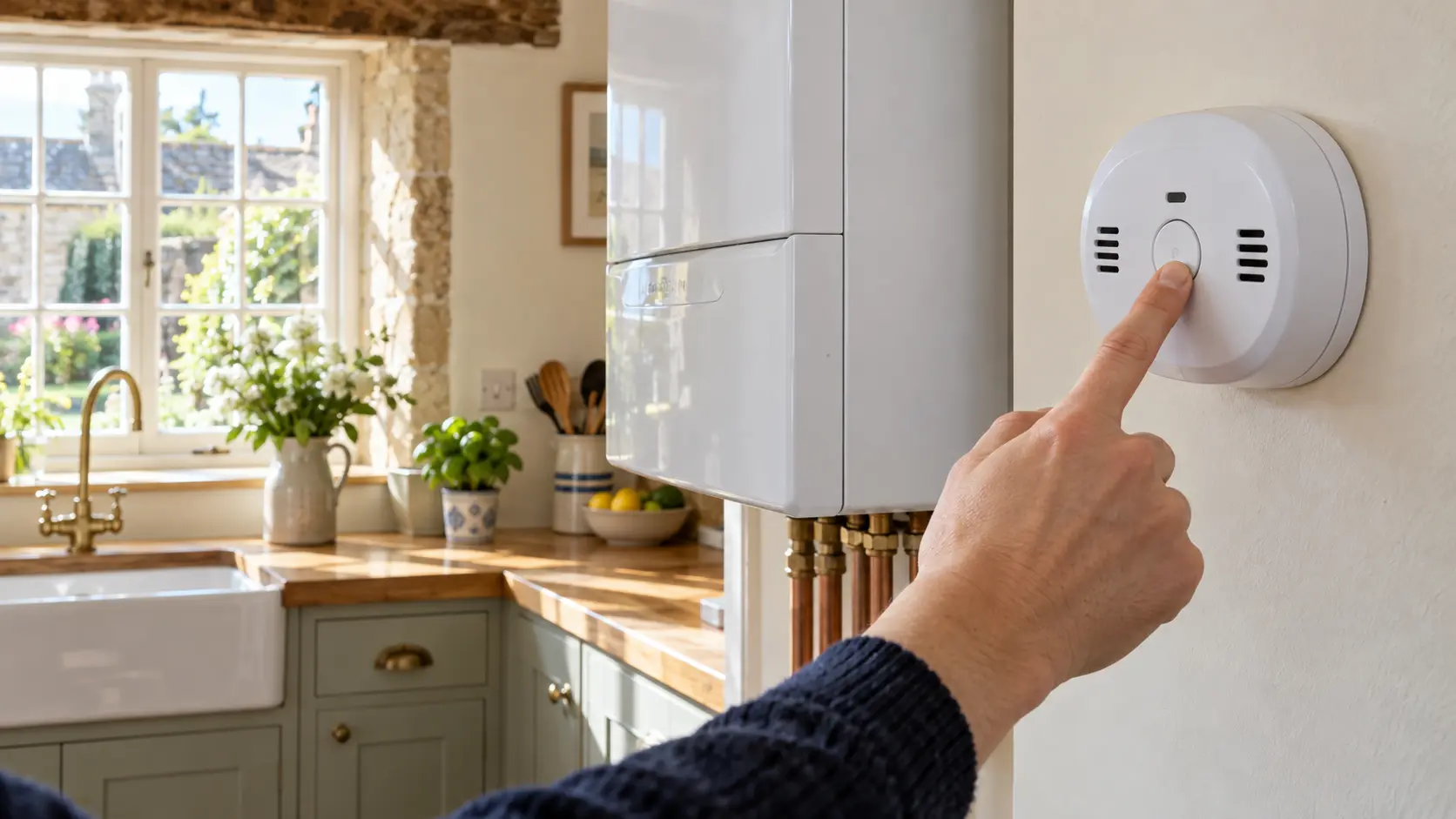
Where to fit a CO alarm
Always follow the instructions that come with your alarm, as positions vary between models. General guidance is:
- In every room with a fuel-burning appliance, such as a boiler, open fire, wood burner or gas fire
- Between 1 and 3 metres from the appliance, horizontally
- On a wall, higher than any door or window but not right up against the ceiling, or on the ceiling at least 300mm from a wall
- In bedrooms or close to where people sleep, as an extra alarm, so you’d be woken
Avoid fitting alarms:
- In enclosed spaces such as cupboards
- Directly above sinks or cookers
- Next to doors, windows, extractor fans or air vents
- Behind curtains or furniture
If your boiler is in a cupboard, fit the alarm in the room outside it, following the manufacturer’s guidance.
How to test and look after it
- Press the test button regularly, ideally once a month
- Replace batteries when the alarm warns you, if it has replaceable ones
- Check the expiry date. CO alarms have a limited lifespan, and many sound an end-of-life warning
- Keep it clean and free from dust, paint and stickers
Choose an alarm marked as meeting BS EN 50291. Never rely on the “black spot” detectors that change colour, as they don’t make a sound.
Warning signs of CO poisoning
Symptoms can feel like flu or a hangover:
- Headaches
- Dizziness
- Nausea or sickness
- Tiredness and confusion
- Breathlessness
A useful clue is that symptoms ease when you’re away from home and return when you’re back, or that several people (and pets) feel unwell at once.
Signs around appliances include yellow or orange flames on gas appliances, soot or staining around boilers, fires and flues, and more condensation than usual on windows.
If your CO alarm goes off
- Open doors and windows straight away
- Turn off fuel-burning appliances if you can do so safely
- Get everyone out of the property into fresh air
- Call the National Gas Emergency Service on 0800 111 999 if you have gas or LPG appliances
- Seek medical help if anyone feels unwell
Don’t go back in or use the appliances again until a qualified engineer has checked them: Gas Safe registered for gas and LPG, OFTEC registered for oil.
Rules for landlords
In England, private and social landlords must fit a CO alarm in any room used as living accommodation that has a fixed combustion appliance (excluding gas cookers), and repair or replace alarms when told they’re faulty. Landlords also need an annual gas safety check (CP12) for gas appliances.
Older homes around Oxford
Older cottages and period homes around Oxford, Witney and Thame often have open fires, wood burners and older boilers under one roof, and chimneys that haven’t been swept in a while. Each fuel-burning appliance needs its own alarm and its own checks. If an ageing boiler keeps showing problems, our boiler installation page explains the replacement options.
Frequently asked questions
How many CO alarms do I need?
At least one in every room with a fuel-burning appliance, such as a boiler, wood burner or open fire. Many people also fit one in bedrooms or close to where people sleep, so the alarm is heard at night. Larger homes with several appliances will need several alarms. Always follow the manufacturer’s siting instructions.
Does an oil boiler produce carbon monoxide?
It can. Any appliance that burns fuel, including oil, can produce CO if it isn’t burning properly or if the flue is blocked or damaged. That’s why oil boilers need an annual service by an OFTEC registered technician and a working CO alarm in the same room.
How long do carbon monoxide alarms last?
It depends on the model. Many alarms are designed to last several years and will sound an end-of-life warning when they need replacing. Check the expiry date on the back or in the instructions, and replace the alarm when it’s due, even if it seems to be working.
Book your appliance safety check
If your boiler hasn’t been serviced in the last year, or you’d like your CO alarms checked, give us a call on 01865 602 994 or drop us a message and we’ll book you in.