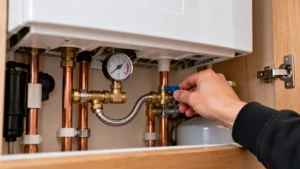
If you’ve got an oil boiler at home, sooner or later you’ll wonder how long it’s actually meant to last. It’s one of the most common questions we hear from homeowners, especially in the more rural parts of Oxfordshire where mains gas just isn’t an option. As an oil boiler installer Oxford homeowners rely on, we’re often asked whether a boiler is worth repairing or if it’s living on borrowed time.
In this guide, I’ll talk you through the average lifespan of an oil boiler, what affects it and the tell-tale signs that it might be time to think about a replacement before you’re left with no heating in the middle of January.
Understanding Oil Boiler Lifespan
Oil boilers are generally known for being robust bits of kit. Many are installed in utility rooms, garages or even outside in a purpose-built casing, quietly getting on with the job year after year.
Unlike gas boilers, oil systems have a separate storage tank and require regular fuel deliveries. The internal components also work slightly harder due to the combustion process, which is why servicing is so important if you want to get the best possible lifespan out of them.
Average Lifespan of an Oil Boiler in the UK
In the UK, a well-installed and properly maintained oil boiler will typically last between 15 and 20 years. Some older models can keep going beyond that, but efficiency often drops off and parts can become harder to source.
We still come across 20 year old units in places like Bicester and Witney that are technically still running. The issue is they’re often costing the homeowner more in fuel and repairs than a modern, high-efficiency replacement would.
If your boiler is over 15 years old, it’s worth keeping a closer eye on it even if it seems to be behaving itself.
Key Factors That Affect Boiler Longevity
Not all oil boilers age in the same way. Some last decades without much drama, others start playing up earlier. Here’s what usually makes the difference.
1. Quality of Installation
If the original installation wasn’t done properly, pipework poorly sized, incorrect nozzle setup or inadequate ventilation, it can shorten the life of the system. A correctly commissioned boiler runs cleaner and more efficiently from day one.
2. Annual Servicing
This is the big one. An annual oil boiler service includes cleaning the burner, checking the nozzle, inspecting seals and testing combustion. Without this, soot builds up, efficiency drops and components wear out faster.
We’ve seen boilers fail years earlier than they should simply because they hadn’t been serviced regularly.
3. Water Quality in the System
Sludge and corrosion inside your radiators and pipework can put strain on the boiler. If your system has never been flushed or doesn’t have inhibitor levels topped up, internal parts can suffer.
4. Usage Levels
A large rural property that relies heavily on heating through winter will naturally put more demand on the boiler than a smaller, well-insulated home.
5. Environment
External oil boilers need proper protection from the elements. We’ve attended callouts where poor siting or exposure to driving rain has contributed to premature wear.
Signs Your Oil Boiler May Need Replacing
Sometimes the signs are obvious. Other times they creep up gradually.
- Frequent breakdowns or lockouts
- Growing repair bills year after year
- Struggling to get parts for your model
- Visible corrosion or leaks
- Noticeably higher oil consumption
- Uneven heating across the house
If you’re experiencing a few of the above, it’s worth reviewing the situation properly. We’ve covered some early warning indicators in our post on warning signs you need a new boiler before it breaks, which is well worth a read if you’re unsure.
Homeowners in areas like Bicester and Witney often tell us they wish they’d acted earlier rather than waiting for a complete failure in the coldest week of the year.
How to Extend the Life of Your Oil Boiler
If your boiler is still in good shape, there’s plenty you can do to help it last as long as possible.
- Book an annual service without fail
- Keep the area around the boiler and tank clear
- Make sure your oil tank is regularly checked for water contamination
- Bleed radiators and address cold spots early
- Consider a magnetic filter if you don’t already have one
Even small steps like keeping an eye on pressure levels or unusual noises can prevent minor issues turning into major faults.
When to Repair vs Replace Your Boiler
This is where experience really matters. A straightforward component replacement on a 10 year old boiler can make perfect sense. Spending significant money on a 17 year old unit that’s already had multiple breakdowns is usually harder to justify.
As a rough rule of thumb, if repair costs are mounting and your boiler is approaching the upper end of its expected lifespan, it’s sensible to at least explore replacement options. Modern oil boilers are noticeably more efficient, quieter and easier to control.
In our experience working across Oxfordshire, many homeowners only start thinking about replacement once they’ve had a winter breakdown. Planning ahead gives you more choice and avoids emergency decisions.
If you’d like honest advice about your current system, the team at Oxtech Facilities Ltd can assess its condition and help you decide on the most practical next step. Contact us today to arrange your boiler service or get in touch for a quote on a new oil boiler and professional installation.